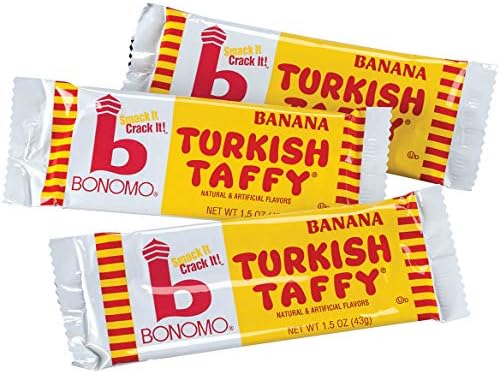
Bonomo Turkish Taffy, Banana, set of 3
$9.75

A boxed confection is almost always chosen for somebody else. The tin sits on a side table through the week or rides in a coat pocket across town. Choosing well comes down to the temperature along the way, how firm the center is, and how long the confection waits after arrival.
People rarely buy a box of hard candies or soft caramels for their own kitchen cabinets. A daughter carries peanut brittle across town to her mother, or a neighbor brings a tin of mints to leave by the front door. The confection goes onto an end table where visitors take one as they pass, or it stays tucked in a pantry until company sits down in the parlor. Because the giver hands the box over, the way the parcel looks when the lid lifts matters. The contents need to arrive in the same shapes they had when packed, without soft pieces sticking together in the corners.
A soft confection reacts to warm air long before a hard candy notices a change in temperature. Chocolates with cream centers, jellies, and pulled taffy soften when a parcel sits in a warm vehicle or rests in the sun on a porch. The outer surface can turn dull or stick fast to the paper cup underneath. A hard lozenge or a spun sugar stick holds its shape through warm weather that ruins a softer batch. When sending a box across several states during summer, a firm ribbon candy or a tin of spice drops handles the journey far better than chocolate creams or fudge.
A box that arrives in good order can still spoil if the room where it sits runs warm. A sunny kitchen counter, the top of a refrigerator, or a table beside a heat register will soften chocolates and melt hard candies into a single solid brick. Confections keep their texture longest in a dry, cool cupboard away from direct sunlight. Once a tin opens to the air, moisture creeps into hard sugar and makes the outside sticky to the touch. Keeping the lid pressed tight between visits stops the humidity in the room from softening the crisp crust on the candy.
Choosing between confections depends on how fast the household will finish the tin. Some boxes are meant for a single evening when grandchildren visit and empty the dish before bedtime. Soft fudge and filled chocolates belong in that group because they dry out once sliced or exposed to air for more than a few days. Hard peppermint drops, cinnamon discs, and barley sugars are built for the long stretch. They sit out in a glass dish for weeks without losing their shape or fusing together, provided the room stays reasonably dry and out of direct sun.
The clear trade with any sweet is that it disappears. A brass trivet or an embroidered runner stays in the living room for years, but a box of ribbon candy lasts until the bottom of the tin shows through. That temporary nature is why people choose it for a visit, because it leaves no clutter behind on a crowded shelf. It fills an afternoon visit with something pleasant, and then the paper wrapping goes into the trash and the tin gets washed out for buttons. It is not an object to keep, and expecting it to last misses the point.
From mrs. kimball's candy counter, where the rest of them sit.
$9.75
$19.85
$14.97
$19.56
Consider the distance the parcel travels and the warmth of the room waiting on the other end. A hard candy or spun sugar stick survives a warm crossing and sits happily in a dish. A soft cream center needs a cool trip and quick eating once the lid comes off.