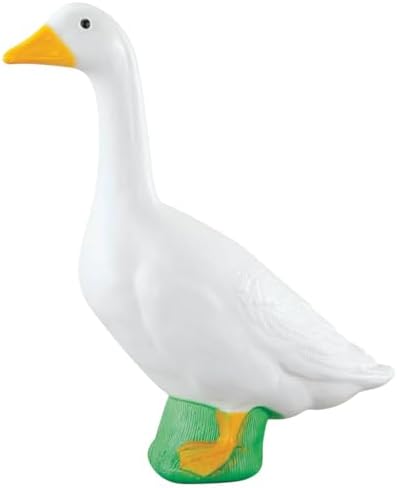
 Fits the 23" porch goose
23" Large White Goose, Plastic
$43.99

A lawn goose stands by the front step through long winters and hot summers. Dressing it for the calendar is an old Midwest habit. People ask how the clothing goes on a bird that cannot move its neck, and what the weather does to the cloth across a full year.
The habit started on front steps where a lawn ornament sat through every season without moving. In the upper Midwest, winter stays late and yards turn brown long before flowers show up. Changing an outfit on the porch gave a household something different to see on the walk to the mailbox. It spread from one front walk to the next because someone saw a neighbor do it and wanted the same thing on their own step. Gaggleville keeps that tradition on our pages. It is practical yard decoration that changes when the weather turns, kept up by people who enjoy seeing the front step look ready for a holiday.
We carry three birds under our roof. The large outdoor bird and the smaller outdoor bird beside it are molded from white plastic. Each of those two outdoor birds has a rubber stopper underneath to fill with clean dry sand so it stays upright in the wind. The large bird also has a drainage hole underneath for rain. The desktop bird is made for an indoor shelf, a desk or a windowsill and comes with a set of outfits scaled down for indoor display. The smaller outdoor bird has its own separate clothing line. Most of the wardrobe in the catalog is cut for the large outdoor bird.
A plastic statue cannot bend its neck or tuck its wings back. Dressing one works differently than putting clothes on a person or a doll. The outfits slip over the head and fasten down the back so the fabric settles cleanly against the body without tearing. Small straps hold the sides in place. A hat sits on the crown of the head and uses an elastic band under the beak to stay put when a breeze crosses the porch. Putting an outfit on takes two minutes once you know where the fasteners sit. The neck stays still, the wings stay down, and the cloth rests flat across the front.
Outdoor fabric meets rain, morning dew and afternoon sun. A goose outfit sitting on wet grass in April gets damp, and wet fabric left against plastic takes time to dry after a storm. Summer sun will fade bright cloth on the south side of a house across months of light. We tell people to accept that fabric shows the season it lived through. When autumn arrives, take the summer outfit off, let the cloth dry completely on a rack indoors, and brush off any dried yard dirt. Folding the outfits flat into a cardboard box keeps them out of direct sunlight until their turn comes around again.
Most people start with two or three outfits rather than a full closet. A raincoat for spring, a warm sweater for late autumn and something red for the winter holidays make a good start. For someone who has an empty front porch, we carry bundles that gather several classic outfits in one group. That gives a new bird something to wear across the four seasons without picking through individual pieces. The goose sits on the step through January snow and July heat, and changing what it wears marks the weeks as plainly as turning a page on the kitchen wall calendar.
From gaggleville porch geese, where the rest of them sit.
Fits the 23" porch goose$43.99
 Fits the 23" porch goose
$23.99
 Fits the 23" porch goose
$22.98
 Fits the 23" porch goose
$21.99
A dressed lawn bird is a quiet Midwest greeting for the neighbors who pass your walk each morning. Choose two or three outfits that match your favorite months, let the cloth dry between seasons, and store the extra pieces flat in a box until the calendar calls for them again.