
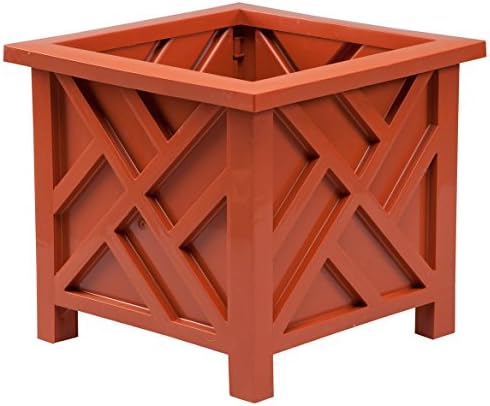
Black Chippendale Planter
$35.16

Wind off the lake finds everything set out on grass or stone, and the pieces on our outdoor pages meet sun, frost and hard gusts from April through November. We keep these shelves stocked for real yards, which means knowing what stays put, what turns with the air and what wants clearing before freeze.
Summer light works on printed cloth day after day. A garden flag or a windsock shows the sun first along the upper hem where the light falls longest, while the lower folds keep their deeper color through the middle of summer. Polyester weave holds its shape in bright heat, but dye softens under steady daylight. Rotating a banner or hanging a windsock where afternoon shade catches it helps the print hold its ground longer. Nothing outside keeps the exact shade it had when it came out of the carton, though clean colors still read well across a lawn.
Ice takes up more room than the rain that made it. When cold weather catches a metal bird bath with water still resting in the bowl, that ice presses outward against the rim and down into the seam above the trellis. A planter carries drainage holes in the base so excess moisture drains into the soil instead of gathering along the bottom wall. A resin angel sheds rain across its shoulders because the surface curves away, but any hollow recess where puddle water sits will crack once the ground freezes hard and stays frozen.
Gusts wear the outer stitch of a garden flag long before the center fabric gives way. On a standard staff, cloth catches the wood, wraps tight around the shaft and stays bound until somebody walks out to unroll it by hand. A flag pole with a turning sleeve carries a collar that spins on the staff, letting the cloth swing around with the current instead of winding into a tight knot. Plant rings pushed deep into garden dirt hold tall stems upright through the same crosswinds, keeping blooms from snapping near the root.
A rain gauge measures water only as well as its spot allows. Fastened directly under a roof line or below the heavy branch of a maple, the glass tube catches gutter runoff or tree drip and gives a false number. The stake belongs out in open grass, clear of the eaves and away from fence boards that block angled squalls. Our window thermometer works on the same plain rule, needing a pane out of direct glare so the glass shows the air temperature instead of heat bouncing off the frame.
A solar lighthouse lights up at dusk only if the small top panel spent daylight in clear sky. Tucked beneath a wide porch overhang or placed along the north wall of a garage, the collector gathers too little charge to run through the evening. Out on open patio stone, the cell takes daylight and runs its small lamp once dusk settles over the yard. Dirt and wet leaves on the collector cut down that charging time, so wiping the top face clean with a dry rag keeps the beacon running as intended.
From yard, porch and garden, where the rest of them sit.
$35.16
$30.92
$9.92
$23.65
A hard freeze tests whether a piece traps rain. Our bird bath and rain gauge both gather water, so each wants emptying before cold weather sets in solid. Planters drain through the base, while the outdoor chair cover sheds sleet over patio seats. The resin angel, downspout extension and hanging fern baskets stand up to low temperatures once standing water is tipped out.